We’ve busy around here! Can’t wait to share this next project with you. This is one that I have to say was a special project for me. With the laundry room relocated to the other side of the house (earlier posts), it left the old space next to the garage vacant. So… I get a MUDROOM!
This project demonstrates how much my husband loves me. The vision I had for the space in no way matched his motivation level at the time this project came up. I wanted a custom-made bench, shelf and board and batten with a tile floor, none of which existed, and he wanted to just give the room a fresh coat of paint, buy a bench, and call it a day. Luckily, he loves me and agreed to the work. Now he is glad we chose this approach as well, but I can’t say he felt the excitement I did when I first described what I wanted to do.
I’ve been crushing on gray lately (along with the rest of the world), and since I don’t have a lot of places I can use it in the rest of the house right now I took advantage of the opportunity to use it in this separate space. A trip to our local home improvement store found a brand new-to-the-shelf gray porcelain. Easy to maintain, perfect for all weather types, and a great color. I’ll show you that in a minute.
First, the obligatory “before” pic:
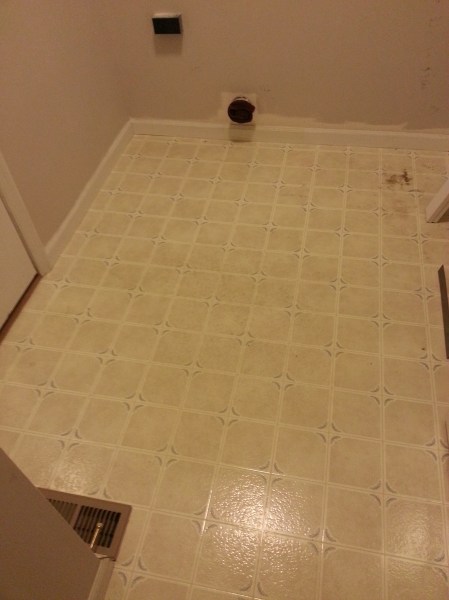
What a beauty, right? These fixer upper houses sure are pretty. And this is after I had already scrapped off the border wallpaper and put a first coat of neutral paint on the walls!
Getting Started
First, we disconnected the power from the old dryer power supply and put the outlet in the wall. (Do not just shove anything electrical in the wall without safely disconnecting it from the power source first!) Then, we placed drywall over the hole in the wall and mudded and taped over it. We did the same thing with the old dryer vent. Tip: Seal the outdoor space where your old dryer vented to, or you could get some critters in the newly abandoned line.
Laying the Tile Floor
Before you start tiling it is advised by the experts to prepare the space and a stable, even floor. After thoroughly cleaning the floor we laid down cement board to create the strong, stable surface for the tile. Luckily the floor was fairly level after this step. Following this my husband mudded and taped the seams while I played with the kiddo. Let. it. dry. For at least 24 hours.
Now, before you just start slapping tile on the floor lay it out. You’ll want to plan for where the tiles will start and end, as well as the distribution across the floor (from side to side and front to back). For example, you typically want to lay tile starting at the back of the room and move forward toward the door so you aren’t working and walking across freshly laid tile. However, that doesn’t mean your back row will be a full sized tile. Look at the below pic.

When we measured and laid out our tile we found that one of the rows would need to be narrower than the regular size. Therefore, we planned for that row to go in across the back wall of the room, knowing we would be placing a bench over it so it wouldn’t be very visible anyway. If we hadn’t laid it out first, we would have put a full tile at the back and then had to cut down the tile in a much more visible area.
My super handy hubby cut the tile and laid the flooring in just two days over a weekend around family stuff. After tiling and allowing to dry we put in the grout. Here is a pic of the finished floor.
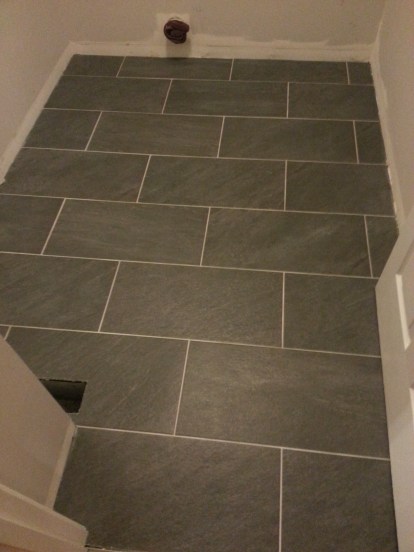
In the next post we’ll be able to share how we planned for and created the built-in bench and shelf, complete with board and batten detailing.
 Not Tomorrow