By now you know we bought somewhat of a fixer-upper. And unfortunately, it’s not just the inside of the house that needs work, but the outside as well. Case in point: there is an 85-foot-wide retaining wall that runs the length of the backyard. When we moved in it was railroad tie, which is essentially wood beams tied into the hill behind it. The home inspector told us it would eventually need to be replaced but would probably last 5-8 more years. He didn’t know what he was talking about. (If you are thinking about purchasing a house with a large railroad tie wall go in expecting to pay big bucks for a replacement and forfeiting your yard for the season in the nearer-than-you’d-like future).
After our first year in the house we began to notice some crumbling and rotting in different parts of the wall. As the coat of stain the sellers had put on before selling wore off with the spring rain, we began to see just how worn down the wall really was.
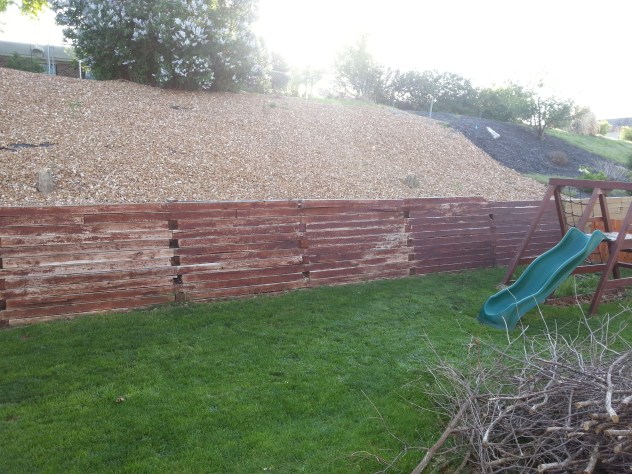
Yikes. Not only did it not look very good, but we worried about the structural integrity. We had it looked at. Every person who came out told us that it would need to be replaced soon. Like before the next rainy season soon.
While not the most exciting of house projects, we knew it was a safety and property concern. We worried we’d be playing out back as a family the day it decided to give way.
In researching options for replacements I began to get inspired by the options. We had always talked about trying to push the wall back into the hill. This would make the wall taller, so we also investigated creating a tier that would cut it back further and visually open the yard. Lucky for us, the retaining wall had been built originally 8 feet from the easement so there was room to carve out if a contractor said it could be done.
Preparing
When we interviewed contractors, we asked them all to give us three bids: a straight replacement, adding a tier or two to the hill to create the illusion of more space (my other half’s idea), and then pushing the wall back four or six feet (my idea) to get more yard space. In all cases, pushing the wall back more than just a couple of feet was cost prohibitive. To add two tiers was expensive but not out of the question. We landed on a compromise of digging out two feet across the entire length of the yard and creating one tier that could cut in another three feet.
We selected a contractor in the fall with the promise to start with his first job of the spring.
Getting Started
The project started in April. The entire existing railroad tie wall was torn out.
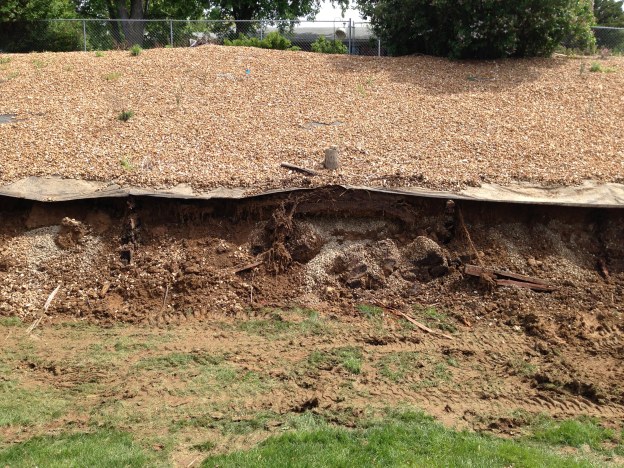
We found out about a week in that our neighbor wanted to get in on the project. Because our contractor told us it would only delay our project “a few days” and he would give us a discount, we agree to it. The contractor’s team started digging out our hillside and we quickly realize that our entire backyard was going to be ruined – grass turned into dirt and the rock from the hill just started falling off into the yard. This was a slight concern for us because we had asked the contractor to try to prevent this where possible and to try to save the rock so we wouldn’t have to completely replace it. The contractor turned out to be a dud, but you’ll start getting his number soon enough as this post progresses.
A few days later we find out the contractor had convinced yet another neighbor to join in on the project. Work stopped in our yard so the work team could tear down the existing wall for that person, who was further up the line. Since our three walls would be connected, and the neighbor two houses over was further “down hill”, they had to build starting at the lowest point and move up. So basically, our house would be finished last – though the whole reason they were there was because we hired them. The frustrating thing about this is that we were not consulted on whether or not this was okay since it would cause an additional delay in our project. It just happened. We expressed frustration but decided to let it go because we were reassured that once the blocks start getting laid, things would move quickly and the contractor would give us a price break.
More Delays
Then it rained. For weeks straight. Towering piles of dirt from the hillside turn into mud in our backyard and the hillside begins sloping into the yard. It was a complete mess.
This is a picture of what our backyard looked like for weeks, taken on a dry day from the back door:
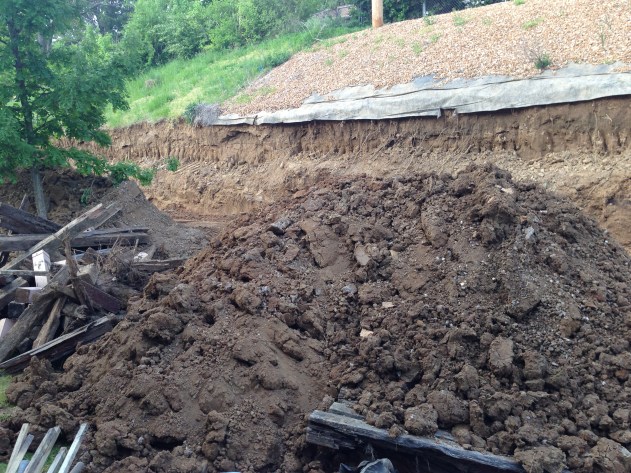
This is also the point when our contractor became an absolute nightmare to work with. I’ll spare you most of the details but we’ll share some so you can see the signs if it starts happening to you: he used our yard as a staging area for all three walls, including dirt, materials, riding their equipment back and forth, etc., so our backyard and side yard become his dumping ground and become incredibly compacted by the machine traffic back and forth – which later had an impact when we needed to put down grass seed to regrow a yard. His guys left their empty cups in our yard at the end of the day, and sometimes the trash from their lunch. Their in and out point became our side yard so that was ruined as well. They broke our neighbor’s fence and didn’t fix it, broke our irrigation system and tried to say it wasn’t their responsibility, didn’t grade properly before saying the work was complete and spread rock that had fallen from the hill (which he had said would happen a bit but not nearly as much as it did) into the yard because he wanted to leave in a hurry, etc., and the list goes on…
Seeing the Light At the End of Very Long…Retaining Wall
I can tell you without hesitation that this was the absolute worst experience we’ve had with a house project or contractor. Somehow the guy had good reviews online and good references, but he turned out to be a complete jerk. Not just because of the above but because of the way he handled our interactions as well. If you are a friend who lives by us and want the guy’s name so you know who not to use, let me know! I honestly wouldn’t work with this guy again if he offered me a half price deal.
Luckily, the man had had to pull permits for the project because of the wall height so the wall construction had to pass inspection. This was fortunate or, based upon what we know about him now, he may have taken some serious shortcuts. Once his wall passed inspection he was out. Things he considered to be “extras” didn’t matter to him. But, at least the wall was done.
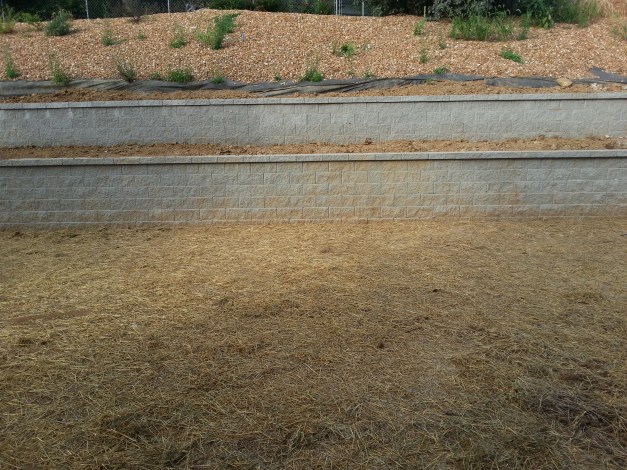
The above photo was after the yard was seeded and strawed to encourage grass to grow.
The project itself lasted April through mid-July, but the backyard remained unusable for several weeks after that as we tried to let grass take root. It was fall before we could use it again — not exactly the three or four weeks we had been expecting. For a project we thought would be done by summer we had missed the whole summer and were lucky to enjoy any warm weather outside.
In the next post we’ll tell you about how we finally finished out this project.
 Not Tomorrow